demo, Hard-to-find, Live!, Peel Sessions

Guy Chadwick Once Tried To Kick Me Full In The Face But I Deserved It So I Did.

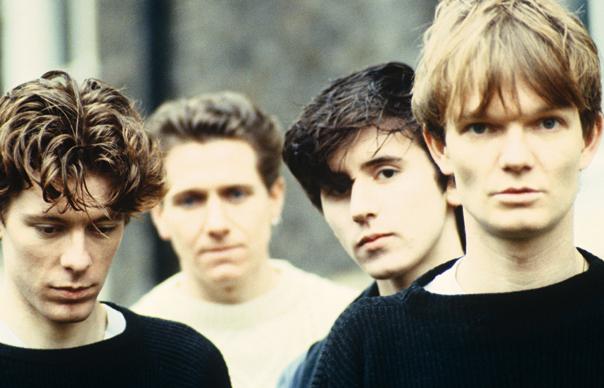
I liked tons of other contemporaries, but The House Of Love were, for me, the band that perfectly filled that post-Smiths/pre-Stone Roses void. They were terrific. A classic twin guitar and bass and drums indie rock band, they wore their influences proudly on their leather-jacketed sleeves; the twang and reverb. The stripey jumpers and black jeans. The semi-acoustic Gibsons. The rows and rows of effects pedals. The sheer bloody distorted racket they could morph into at the drop of a well-timed drum stick click before coming back as one to the melody – Guy Chadwick sooo wanted to be the new Lou and his band a Velvet Underground for the late 20th century. At a time in music when many bands were posturing in ponytails on political platforms, The House Of Love were always more Nico than Biko. That they blatantly added a female singer with high cheekbones and a 60s bowl cut who happened to be German only hammered the point home to those less observant than yer average muso geek.
house of love classic

By the time the band had had a modicum of success, Andrea Heukamp, she of the bowl cut and high cheekbones, had gone her own way. With her in their ranks, The House Of Love had cut their original version of Shine On. Not the over-produced, radio-friendly, siren-led version that, backed by their major label Fontana’s money gave the band their highest chart placing (20), but the far superior played-in-a-tunnel original version. This version was all reverb ‘n twang punctuated with a stratospheric guitar interplay provided by Guy Chadwick and Terry Bickers, a bonkers but brilliant guitarist who’s hedonism for the excesses encouraged by the music industry could make Bez and Shaun Ryder seem like Smartie-guzzling Boy Scouts in comparison. (He’s the angelic looking one 2nd from the right). At one stage Bickers’ erratic behaviour-via-drug use got so full-on the band elected to throw him out of their van halfway up some motorway or other between last night’s venue and tonight’s. Bickers left the band around this point, but would return to the fold a few years later. But you probably knew that already.

Shine On was followed up by one more equally sonically-brilliant but anonymous-to-the-public single. Real Animal came and went in a real blink-and-you’ll-miss-it moment. Had you heard it, you’d have been telling anyone who’d listen just how good The House Of Love were. I know I did. John Peel had played it on occasion and, as recording it to a C90 had escaped me at the time, I had to wait until a few years later to own it when I picked up a German import compilation of the band’s first few singles.

house of love live

Having an ear glued to Peel was good news for the House Of Love fan. Peel was a fan as well, which meant they regularly popped up in session (7 in all, between 1988 and 1992) and he always seemed to have first play of the next single. The first single to be released as a four piece, Christine was the one that put the band in the spotlight. All tough as nails guitars and ba-ba-ba-da-ba vocals, Christine once again failed to make the ‘real’ charts, despite being a creatively marketed Creation Records 99p no-risk disc. But the band’s next single (and last for Creation) was their best yet. Fading in on an instantly recognisable guitar riff, Destroy The Heart was a heady mix of shimmering chords and pistol-crack drums, Bickers’ anti-solos confirming him as the next indie rock hero to follow in Johnny Marr’s footsteps, although John Squire was just around the corner, ready to pop up with his band and change the rules and define an entire epoch. As I said earlier, betwixt and between The Smiths and Stone Roses. But you know all that already too.

Destroy The Heart

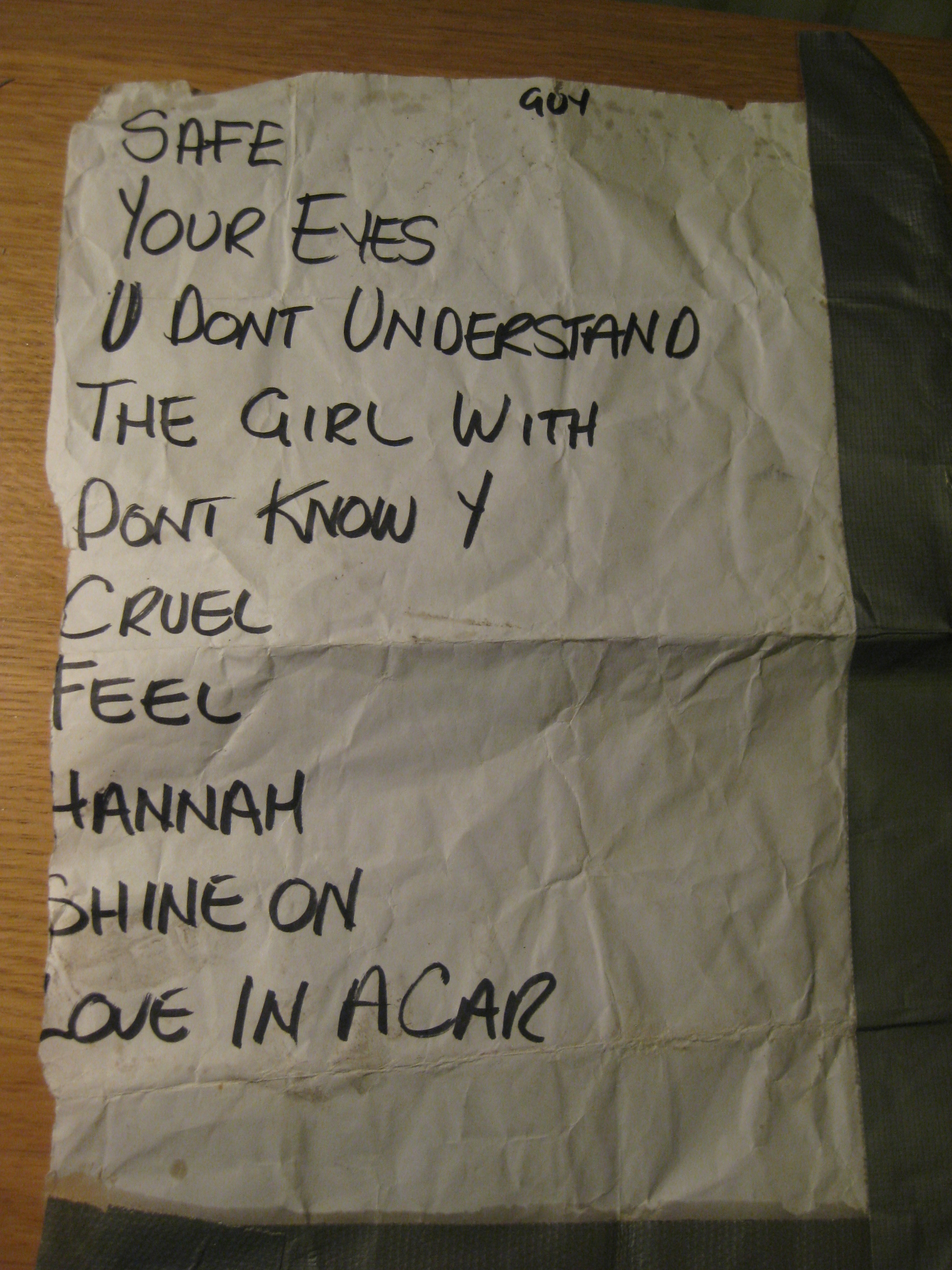
As you’ll see from the video, The House Of Love were more frantic, more fuzzed, more furious than on vinyl. They played King Tuts three nights running, with a different set each night. Gigs weren’t that expensive back then and I don’t know why we didn’t go to them all, but we chose the Friday night only. Full of spirit (and beer and wine) I managed to squeeze my way to the very front of the stage and, being a little shit, managed to annoy Guy Chadwick at one of the last songs by grabbing the base of his microphone stand and twisting it away from his mouth just as he was about to sing. This forced him to turn his head to the side slightly and remain in an awkward stance until he’d finished the verse or chorus or whatever he was singing, before heading the end of the mic like a crap footballer (“Thuuunk!”) back to his favoured position. As you might imagine, he wasn’t in the least amused by any of this. The second time I did it, he looked down from his lofty King Tuts stage position and scowled witheringly at me. When I did it for a third time, he aimed a well placed Doc Martin at my face which only just missed. Punk’s not dead! I suppose I deserved it. It did give me a bit of a fright, but as they finished, I made sure Guy wasn’t watching and I managed to detach the heavily-gaffer taped setlist from the stage and folded it into my pocket:
hol setlist

Afterwards we went to The Arches. (Bouncer, frisking me. “What’s that?” “It’s my House Of Love setlist.”) Still full of spirit (and more beer and wine), we made idiots of ourselves dancing to the anonymous doof-doof-doof house music of the time before heading home – by taxi? by bus? did we stay on someone’s floor until the first light of morning? – I can’t actually remember. Anyway, guess what? In a bizarre turn of events, look who’s due to play at those very same Arches in April this year. It’s only Guy Chadwick and whoever else constitutes The House Of Love these days. I’ll be there, but taking up my more customary back of the room position that I’ve come to appreciate in my advancing years as a gig goer. If you’re coming, I might need hawners. You up for it big man?

Cover Versions, demo, Hard-to-find, studio outtakes

Three Little Birds

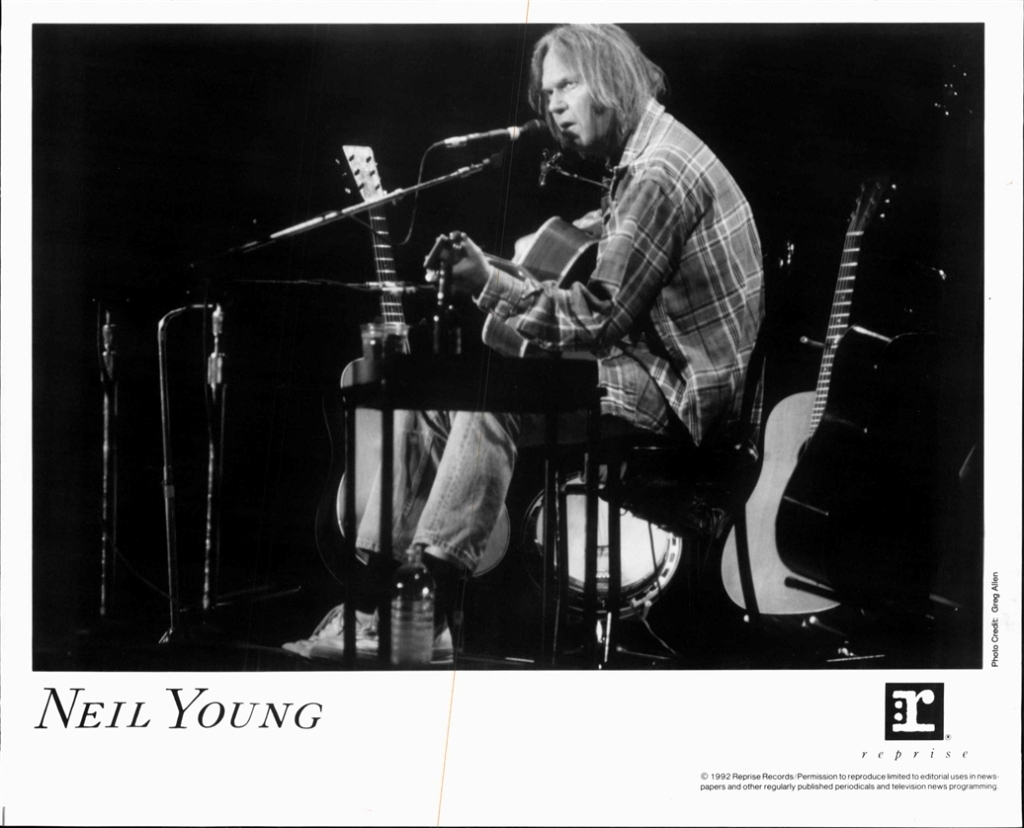
I’m just about finished Neil Young‘s autobiography, Waging Heavy Peace. It’s an annoying read, but now I’ve come this far, I need to finish it. I love old whiny Neil, I really do, but his book goes about dispelling the myth behind the man faster than the man himself was able to hoover up the white stuff backstage during The Last Waltz. The chapters jump from one time and place to another time and place and back again with random abandon (which I don’t mind) but the content therein just bores me. There’s just not enough background information on the kind of stuff I’d expect most Neil Young fans to be interested in.

 young høyde

For every “The day I wrote Cinnamon Girl…” you get half a dozen finger-pointing one-sided arguments on the benefits of the electric car Neil’s been designing for the past 390 or so years. For every “We had a lotta fun, I got another STD” tale of woe you get a step-by-step account of his shopping trip to Costco. Really! For every “Oh man! Let me tell ya about this one time in the Springfield…” you get seventeen lectures on the rubbishness of mp3s.  Indeed, ol’ Neil’s got a big shout for himself. He’s offered to help Apple improve the sound quality of their music files and much of his book reads like a particularly crass advertorial. He takes folk out to his car (always a ’51 this or ’67 that, never a B-reg Cortina) and plays them music through his self-designed PureTone/Pono audio system that he hopes will become the leading portable audio player on the market. Whatever, Neil. Just tell us more about the Ditch Trilogy and your guitar sound on Weld, and much, much less about the movies for Human Highway and Prairie Wind.

Much like his music, where great album is followed by mediocre shelf clutter (for every pearl, there’s a Pearl Jam, perhaps?), so too his story alternates between revelation and exasperation. He does admit that he shelved too many good albums in the 70s at the expense of at-best average ones. Maybe he should’ve got himself an editor who could’ve told him likewise about the output of his writing.

neil young shades

Young wearing yer actual After The Gold Rush jeans.

Press ‘Play’ to hear groovy 60s Reprise Records radio promo ad.

At the end of the 60s, Neil Young found himself living in Topanga Canyon, overlooking the Pacific Palisades in the Santa Monica Mountains. A liberal, boho-rich 60s community of artists, actors and assorted creative types, it lent itself perfectly to Young’s own creative, carefree spirit. Here, he would pen many of the songs that would later become staples of his catalogue and live set. Sugar Mountain. I’ve Been Waiting For You. Helpless. Tell Me Why. Only Love Can Break Your Heart. All materialised in some form or other in this period. Not bad going for a 24 year old song writer. Amongst his ouvre during this time was Birds.

neil young wasted

Birds  (Neil Young early version from Topanga Canyon)

Birds is not that well regarded in what is undoubtedly a gold-standard catalogue, but it should be. Eventually appearing on his 3rd solo outing, 1970’s After The Gold Rush, Birds found itself sequenced mid-way through side 2, sandwiched between acoustic Neil nugget Don’t Let It Bring You Down and the electric Neil ‘n Nils Lofgren guitar duellin’ When You Dance You Can Really Love. Birds is a great wee song; downbeat, introspective and yearning with a terrific backing vocal from the assembled Danny Whitten (who’d be dead from heroin in 2 short years), Crazy Horse’s Ralph Molina, old partner in rhyme Steven Stills and the afore-mentioned 18 year old wunderkid Nils Lofgren.

Birds (After The Gold Rush album version)

Hands down even better is the mono single released to promote the Gold Rush album. A markedly different version from the piano-led album version, the single places greater emphasis on shimmering electric guitars and richly plucked acoustics without losing the soaring, whisky-soaked, weed-smoked 4-part harmonies in the chorus. And it’s all over in barely more than one and a half extraordinary minutes. Most folk know Birds from the album, but the mono single is where its at…

Birds (mono single version)

A few weeks ago, when the news of HMV’s decline was made public, I found myself shamelessly plundering their website for keenly priced booty. Top of my wish list was Neil Young’s Archives Project, the catch-all, multi-disc labour of love that had been assembled by Young himself after trawling years of tapes from his own archives. At £200+ a pop it was one box set I could never justify purchasing. I’d already acquired it via other means (I’m sure you know what I mean) but the real deal offers updates via the web and enough interactive material to satisfy even the keenest of Rusties. Sadly, HMV had none to sell, so the mp3s above are taken from my own slightly more dodgy archives. Be careful not to play them too loud, though, or old Neil will be round in his car, the ’62 Chevy perhaps, or the ’78 Jensen, to make you listen to how they should sound on his latest hi-spec audio player. And he’ll probably charge you $250 for the meet-and-greet privilege. Hippies, eh?

Neil Young reprise promo

*Bonus Track!

From the throwaway and listened-to-less-than-once-before-being-filed-away-waste-of-his-time-and-my-money Studio 150 covers LP (phew!), here’s Paul Weller, in full-on white man sings Otis guise doing a fine version of Birds. Perhaps a reappraisal of Studio 150 is required.

Six Of The Best

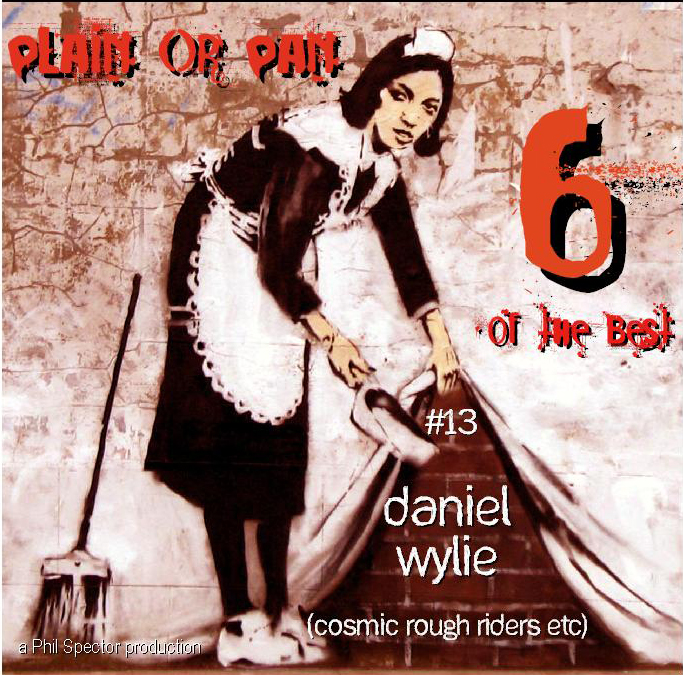
Six Of The Best – Daniel Wylie

Six Of The Best is a semi-regular feature that pokes, prods and persuades your favourite bands, bards and barometers of hip opinion to tell us six of the best tracks they’ve ever heard. The tracks could be mainstream million-sellers or they could be obfuscatingly obscure, it doesn’t matter. The only criteria set is that, aye, they must be Six of the Best. Think of it like a mini, groovier version of Desert Island Discs…

daniel wylie

Number 13 in a series:

Daniel Wylie is a solo artist best-known as the honey-toned vocalist in Glasgow’s Cosmic Rough Riders, a jinglin’, janglin’ bona fide turn of the century Top 40 chart group, with Top Of The Pops appearances and support slots to some of the biggest acts in the World under their belt. If Cosmic Rough Riders and their influences were a question on Pointless, high scores would be awarded all round for references to the 4 Bs – Beatles, Byrds, Beach Boys and Big Star – the mother lode of West of Scotland guitar bands. The smart answers would be on the less obvious; 70s lovers’ rock reggae. Jazz-influenced AOR artists. Contemporary bands. All perhaps obvious once heard, but not the first artists that spring to mind whenever you choose to give essential CRR compilation Enjoy The Melodic Sunshine a wee spin.

Being like a potted history of all their best bits, smash hit Revolution (In The Summertime) (#35 with a bullet) is as good a place to start as any if you’re unfamiliar with their work, where every song appears to have been written, recorded and placed on a timeline anytime between July and August. Daniel and his band’s inter-woven 3 part harmonies and chiming guitars created the unmistakable sound of summer. Nothing new, of course. Plenty of bands, especially in this part of Scotland, seem particularly au fait with this concept, but the Cosmic Rough Riders were one of the finest.

What’s perhaps most surprising about Cosmic Rough Riders is that the ‘band’ was essentially Daniel and some hired help. Think Roddy Frame/Aztec Camera. Or Matt Johnson/The The. Nothing new, really. Even The Smiths on paper were really only Morrissey and Marr. And those ‘inter-woven 3 part harmonies’? Live, Daniel would sing along to his pre-recorded harmonies whilst his band of hired help mimed in best ‘Live On Top Of The Pops’ fashion. Aye! Why? Well, after Alan McGee showed interest in signing him, Daniel hastily put together a band that would enable him to play his songs live. Duly signed there and then, as a band rather than solo artist, Daniel found himself in a situation of Spinal Tap proportions when his new bandmates began demanding royalties for records they hadn’t initially played on. Daniel quickly and quietly left, leaving Cosmic Rough Riders to eek it out, with ever-decreasing returns.

In the intervening years, Daniel has done what he does best. He writes and records regularly and has amassed loads of material. “Enough good stuff for twenty more albums without dropping quality“. His 6th solo outing, Fake Your Own Death is ready to go, and will be released as soon as the right deal comes along. In the meantime, you can listen to assorted tracks via YouTube. One of the best, Everything I Give You, wears its influences proudly on its plaid-shirted sleeve (music by REM, harmonies by CSNY). It’s terrific. I think you’ll like it :

cover art

Daniel has picked 6 great tunes as his Six Of The Best:

Elizabeth Archer & The EquatorsFeel Like Makin’ Love (Dub Version)

I’m a massive fan of 60’s and 70’s pop reggae. I heard this on John Peel’s show one night and had to order it from Bruces Records in Glasgow. He told me 16 people had ordered this hard to find single. Some years later, I heard Edwyn Collins mention it among his favourite records and how, after hearing it on John Peel’s show, he ordered it from Bruces Records. I met Edwyn a couple of years ago and we spoke about how he was one of the 16 and how great this single is.

R.E.M.Perfect Circle

Not only my favourite R.E.M. song but also Michael Stipe’s favourite. Like on Nightswimming, the beautiful piano motif was written by ex drummer Bill Berry. What a loss he was to the band. When he left, he left a massive void that no one managed to fill.

Band Of Horses Detlef Schrempf
I love Neil Young and lots of Band Of Horses songs remind me of classic 70’s Neil Young. This is a beautiful melancholic tune that compares favourably with another great Neil Young influenced band, My Morning Jacket’s best work.

Steely DanOnly A Fool Would Say That

Acerbic and sometimes sarcastic lyrics, were Steely Dan trademarks. They managed to dress them up in amazing tunes and great arrangements, making the perfect package for intellectual music fans around the world…or you might just like the tune.

John MartynFine Lines

John Martyn is an English songwriter who was schooled and brought up in Glasgow by his Gran. He went to Shawlands Acadamy and learned his trade in the folk clubs of Glasgow where he was taught to play guitar by among others, folk legend, Hamish Imlach. Whilst he started out as a folkie, he followed in the footsteps of Joni Mitchell by embracing a more Jazz oriented style. “Fine Lines”, is a transitional song from his mostly experimental album “Inside Out.” A song on which he manages to “touch your soul.”

Todd RundgrenI Saw The Light

Todd Rundgren, is revered by musicians in the same way that Brian Wilson, is. His skills as a songwriter, producer, musician and singer, are up there with the very best. It was a difficult choice between this song and “Hello It’s Me”, but I heard this on the radio when I was around 14 years old and at 54 years old, I’m still listening to it and loving it just as much as when I first heard it all those years ago.

Every Six Of the Best compilation comes in a handy RAR download file. Get Daniel Wylie’s here. Or here.

dan wylie 2

Listen to tracks and keep up to date with all things Daniel-related via his My Space page. (Shhh! It’s not that up to date).

Or listen to a selection of his songs via Daniel Wylie Radio.

Or buy his music via iTunes. Go! Now!

Cover Versions, Get This!, Gone but not forgotten, Hard-to-find

Born To Be With You Triple Whammy

chordettes

Born To Be With You was an American top 5 single for The Chordettes in 1956. A largely forgotten piece of bobbysox balladeering, it’s a proto doo wop, proto girl group paen to a just-out-of-reach romance, all minor key melodrama and vocal harmonies. It was quite clearly an influence on the young Phil Spector a few years later. A few short calendar years maybe, but it might as well have been several lightyears, given what happened in the intervening years betwixt and between The Chordettes and the golden touch of Phil Spector. 1956 was Year Zero for rock ‘n roll. The year that Elvis and his gyrating pelvis appeared on television screens with the dual effect of horrifying the moral majority of Americans whilst galvanising youths everywhere into action.

Before Elvis there was nothing.”

John Lennon said that. And after Elvis there was everything. I’ll say that. Firstly, Tin Pan Alley songwriters and their ‘moon in June‘ blandfest of lyrics were given a huge boot up the arse and out the door. As they were leaving, in came bands who played their own instruments, wrote their own songs, presented themselves as a gang and dressed accordingly. In a few short years, the thrill of rock ‘n roll and all its attendant detritus was well in motion. But you knew that already.

Phil Spector was a bit of a throwback to that pre-Elvis era. The auteur of teen angst, he used assorted songwriters to pen the hits, before introducing the song to the musicians who would bend and shape it into Spector’s vision of a 3 minute symphony, before finally introducing the singers to the song and pushing them to the very edge of their limits in order to create pop perfection. Goffin & King. Ellie Greenwich. Jeff Barry. Writing for The Ronettes. The Crystals. Darlene Love. I’m sure you know them all. Phil even got himself a writing credit for coming up with the “woah-woah-woah” part at the end of Mann & Weill’s ‘You’ve Lost That Loving Feeling‘. Clever man, that Phil Spector. Well, he was at one time…

dave edmunds

Spector’s influence reached far and wide, as far even as that hotbed of rock action, south Wales. In 1973, following the huge success of I Hear You Knocking (a favourite of John Lennon, coincidentally), and after a part in David Essex’s Stardust, Dave Edmunds combined his love of early 50s rock ‘n roll with the technique of Phil Spector and produced his own version of The Chordettes’ Born To Be With You. It’s terrific! A wall of 12 string guitars, stratosphere-scraping vocals and galloping, clattering rat-ticky-tat percussion. It’s measured. Precise. Perfect. By the time the brass ‘n slide guitar part comes soaring in, you’ll already have convinced yourself this is the best record you’ve heard all year. Someone like Glasvegas could waltz in and do it in the same style and make it sound even huger. “Coz ah wiz borrrrn…tae be wi’ yooo!” But for the moment, content yourself with Dave Edmund’s 40-year old version. I think you’ll like it a lot.

Pop Quiz Interlude

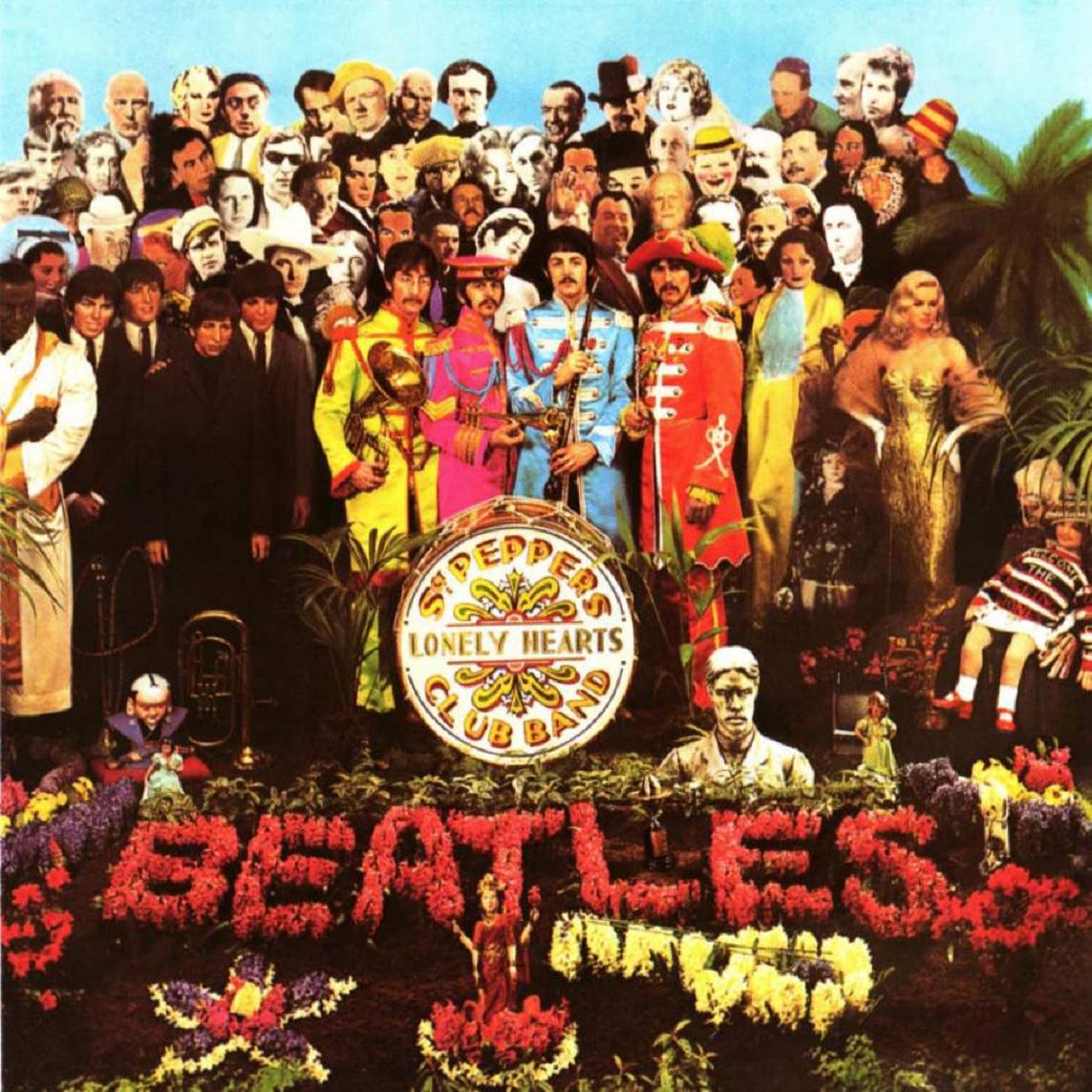
Q. Aside from The Beatles, name the only other rock/pop artists on the cover of the Sgt Peppers LP.

sgt pepper

A. Bob Dylan (top right, back row) and Dion (7th from left, 2nd back row. Just next to Tony Curtis and behind a wee bit from Oscar Wilde).

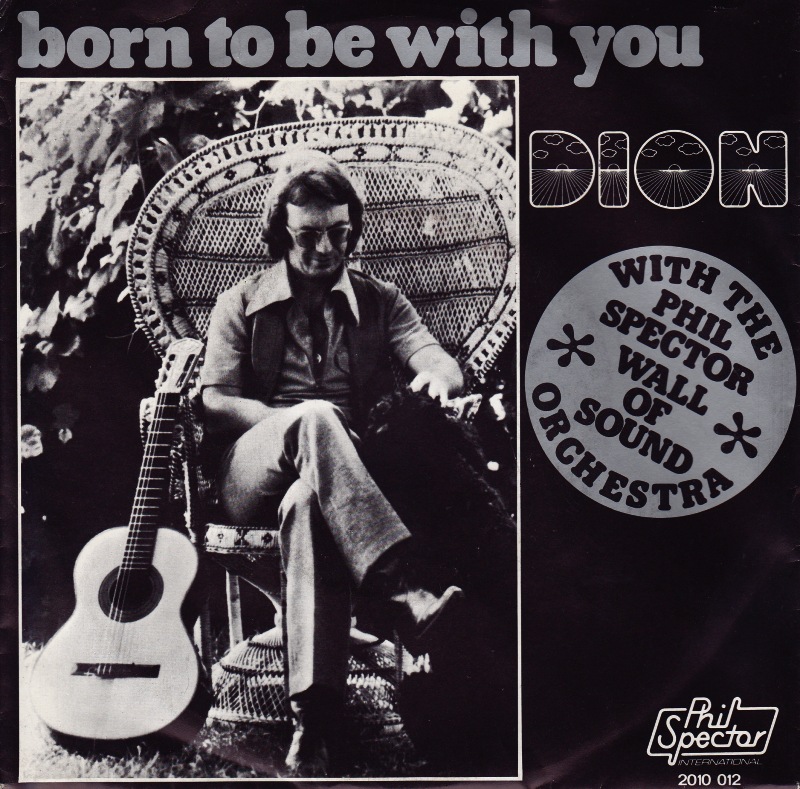
Dylan you’ve probably heard of. Dion too, for that matter. Dion was a duh-duh-duh-d’-duh-duh duh dude. His rasping, doo-wopping Noo Yoik Bronx vocal created monster hits. The Wanderer. Runaround Sue. A Teenager In Love. I’m sure you’re singing them now, ingrained as they are in the very fabric of rock ‘n roll.  Dion was also the Marti Pellow of his day – pop idol on the outside whilst rattling to the bones with heroin on the inside. When the hits dried up, Dion found himself label-less, friendless and definitely down and out in New York City. Following a religious epiphany (c’mon! what did you expect?!?) and subsequently ditching the drugs, 1975 found Dion working with Phil Spector on his own version of Born To Be With You.

dion 7

Ironically, it’s less Spectorish than Edmunds’ rollin’ and tumblin’ version. Dion’s is downbeat, introspective and melancholy, sounding exactly like the kind of record an artist makes when they know they’re in the last chance saloon; measured (again) and majestic. At just short of 7 minutes, it’s something of an epic. Jason Pierce of Spiritualized is said to be a huge fan of this record, which makes perfect sense. It’s almost Spiritualized in template, with it’s steady, pulsing riff and inter-woven sax breaks. And the background drugs story was no doubt the icing on the cake for our Jason.

Good records. That’s what they are. Play them. Enjoy them. Pass it on.